


 Inversiones Maslosa / Insights / Blog / It is not enough to teach our children how to earn money. We must also teach them what to do with it.
Blog
Diversification, Profitability and Added Value
Inversiones Maslosa / Insights / Blog / It is not enough to teach our children how to earn money. We must also teach them what to do with it.BLOG
Opinion and economic analysis
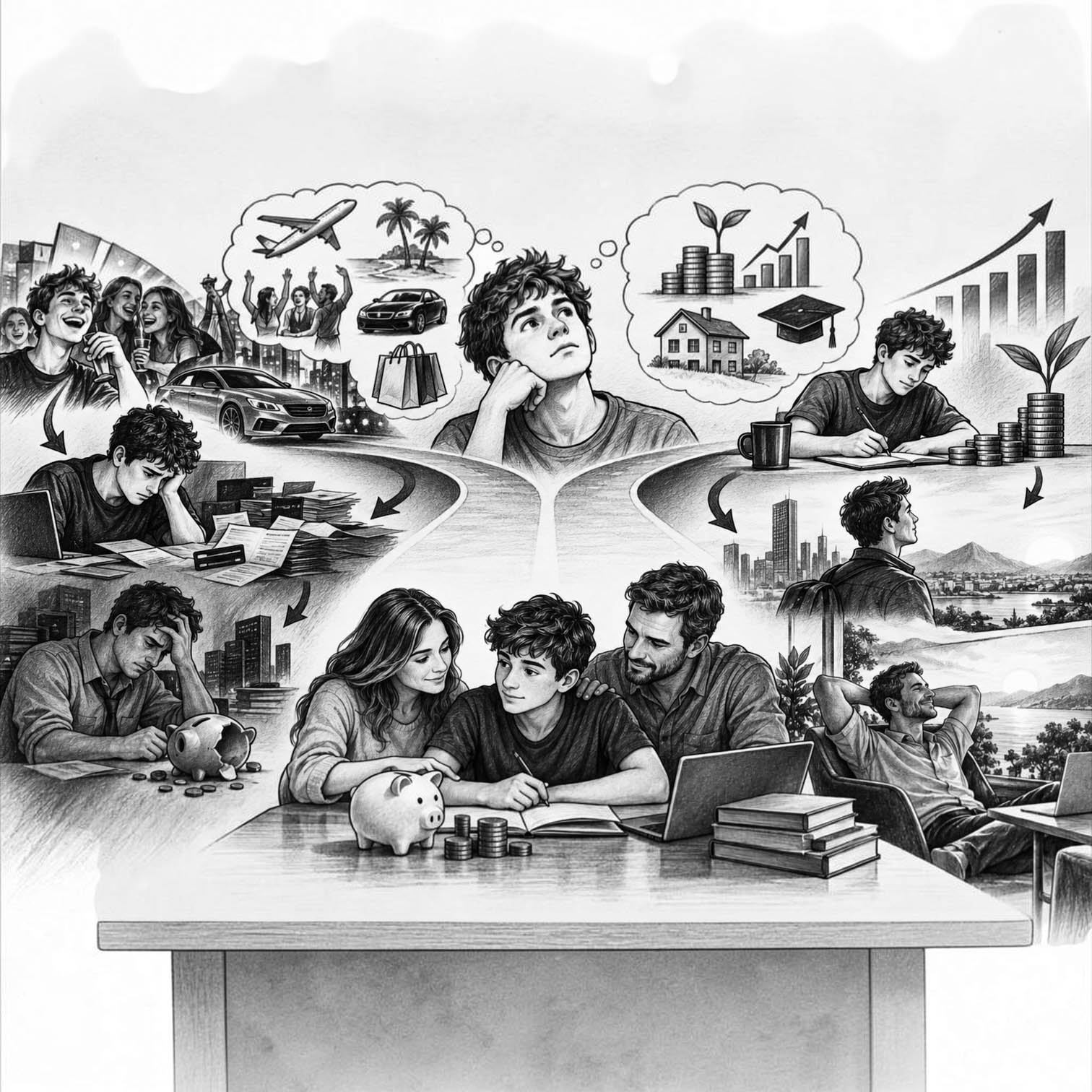
IT IS NOT ENOUGH TO TEACH OUR CHILDREN HOW TO EARN MONEY. WE MUST ALSO TEACH THEM WHAT TO DO WITH IT.
There is something that particularly strikes me when we talk about the economic future of younger generations. We place enormous importance on their academic education, their career opportunities and ensuring that they earn a good income, yet we barely talk about how they should manage the money they will earn throughout their lives.
We seem to take it for granted that studying, getting a good job and earning a good salary are enough to achieve financial stability. And, quite frankly, I believe this is one of the most significant misconceptions in the way we approach things as a society.
Earning money and knowing how to manage it are two very different things.
You can have a high salary, appear to enjoy a comfortable lifestyle and, after twenty years of working, discover that you have barely built anything. You can also have an average income and achieve a considerably stronger financial position because you have understood something that many people learn too late. Part of your income should be working for you.
This distinction should be taught long before our children receive their first paycheque.
Let’s consider an example. A young person who starts working at the age of 22 and decides to set aside €100 a month to invest is doing something that may seem insignificant. However, if they maintain this discipline for 40 years and achieve a hypothetical average annual return of 6%, they could accumulate around €200,000, before taxes, fees and inflation.
They will have contributed €48,000. The remainder would come from the accumulated investment returns.
We are not talking about becoming a millionaire or finding an extraordinary investment opportunity. We are talking about understanding that wealth is also built through small decisions, repeated over a long period of time.
And this is where a concept I consider fundamental comes into play. The cost of starting late.
When people are 20 years old, they tend to focus on the present. They want to enjoy life, travel, shop, go out and have new experiences. This is perfectly natural. The problem is not spending money or enjoying it. The problem is failing to understand that every financial decision has an opportunity cost.
The €100 that may seem insignificant today could represent a substantial amount several decades from now if invested appropriately. The same is true in the opposite direction. Small recurring expenses, consumer debt and a lack of financial planning can end up seriously undermining our financial security.
Of course, investing does not mean taking risks blindly. We need to understand financial products, diversify, understand volatility and have realistic expectations. Nor should we forget that inflation erodes purchasing power and that no future investment return is guaranteed.
But that is precisely why we need financial education.
We cannot leave our children to discover how money works through mistakes, debt and uninformed decisions.
I believe parents have a responsibility that goes beyond paying for their children’s education or helping them find their first job. We must teach them to distinguish between income, saving, investing and spending. We must explain that not all the money deposited into an account is available to spend and that true financial security does not depend solely on how much you earn, but also on how you manage your resources.
There is one idea that I find particularly important. Our children will probably have to face an economic future very different from the one we have known. Technological changes, developments in the labour market, housing costs and uncertainty surrounding pensions make it even more important for them to develop financial independence.
We do not know what opportunities they will have or what economic conditions will be like thirty years from now. But we can help them develop a mindset that will enable them to adapt more effectively to any circumstances.
And, in my opinion, that is one of the best investments we can make in their future.
It is not about teaching them to chase money. It is about teaching them to understand it, manage it and use it to gain freedom.
Ultimately, perhaps we should change a question we routinely ask our children.
Instead of asking them only what they want to study, what career they want to pursue or how much they want to earn, we should also start asking them what they intend to do with the money they earn through their work.
Because working all your life to earn money is one thing. Making part of that money work for us as well is something entirely different.
And that difference can change a life.


WHO WE ARE
WHAT WE DO
INVESTMENT AREAS
INSIGHTS

